Corner Storage Guide
The Complete Lazy Susan Cabinet Guide for a Smarter, Clutter‑Free Kitchen
From a classic corner lazy susan to a space‑saving wooden lazy susan cabinet, discover the best lazy susan kitchen cabinet options, accurate lazy susan cabinet dimensions, and a buying guide that turns wasted corner space into your kitchen's most useful storage.
- 0% More Usable Corner Storage
- 0° Full Rotation Access
- 0+ Common Cabinet Sizes
- 0 Seconds to Find Anything
The Basics
What Is a Lazy Susan Cabinet?
A lazy susan cabinet is a kitchen cabinet — usually installed in a corner — fitted with circular rotating shelves instead of fixed ones. Spin the shelves, and every pot, can, or spice jar rotates into view, eliminating the awkward "dead corner" that most kitchen layouts create. It's one of the simplest upgrades for turning a wasted corner lazy susan space into fully usable storage.
How a Lazy Susan Cabinet Works
Inside the cabinet, one or two circular (or "pie cut") shelves sit on a center pivot or a track of ball-bearing rollers. Mounted in a corner cabinet, the turntable spans both walls, so a single spin brings items from the far back corner — usually the hardest spot in any kitchen to reach — right to the front of the cabinet door.
Benefits at a Glance
- 360° access — no more kneeling and reaching into a dark corner.
- More usable storage from corner space that's normally wasted.
- Faster to find items — spin instead of digging through stacked cookware.
- Cleaner kitchen layout with a fully optimized, modern cabinet footprint.
Common Uses
A wooden lazy susan cabinet is most often used to store pots, pans, and lids; canned goods and dry pantry staples; mixing bowls; small appliances; and spice or condiment collections that would otherwise get buried in a standard kitchen cabinet corner.
Full Breakdown
Types of Lazy Susan Cabinets
Not every lazy susan cabinet is built the same way. Some are defined by where they're installed — a corner lazy susan cabinet, base cabinet, or wall cabinet — while others are defined by the shelf shape itself, like kidney, pie cut, D-shape, or half moon. Filter by type below to find the right fit for your kitchen.
Corner Lazy Susan Cabinet
The most common setup — a rotating shelf system built directly into the unused corner where two runs of cabinetry meet, accessed through a single door or a pair of bifold doors.
Pros
- Reclaims otherwise dead corner space
- Full 360° rotation in most designs
- Works in both new builds and retrofits
Cons
- Requires precise corner measurements
- Door hardware can be bulkier
Best for: L-shaped kitchens with a blind or open corner
View on AmazonLazy Susan Base Cabinet
A floor-level lazy susan kitchen cabinet that sits beneath the countertop, typically used for heavier items like pots, pans, small appliances, and bulk pantry goods.
Pros
- Handles heavier cookware and bulk items
- Larger shelf diameter than wall units
- Common in both corner and straight runs
Cons
- Bending down to access lower shelf
- Heavier units need quality bearings
Best for: Storing pots, pans, and small appliances
View on AmazonLazy Susan Wall Cabinet
Mounted above the counter, this smaller rotating unit is ideal for lightweight, frequently used items like spices, condiments, and canned goods within easy reach.
Pros
- No bending or kneeling required
- Great for everyday small items
Cons
- Smaller diameter limits capacity
- Not suited for heavy cookware
Best for: Spices, canned goods, and small jars
View on AmazonWooden Lazy Susan Cabinet
A wooden lazy susan cabinet uses solid wood or plywood shelving — typically maple, birch, or bamboo — prized for durability, weight capacity, and a warmer look than plastic units.
Pros
- Higher weight capacity than plastic
- More durable long-term
- Matches natural wood cabinetry
Cons
- Higher price point
- Heavier, slightly harder to install
Best for: Long-term durability and natural-wood kitchens
View on AmazonKidney-Shaped Lazy Susan
Curved on two sides to follow the cabinet door's swing path, the kidney shape maximizes storage while leaving clearance so shelves don't collide with the door frame when rotating.
Pros
- Clears door swing without snagging
- More surface area than a half moon
Cons
- Irregular shape wastes some edge space
- Fewer off-the-shelf size options
Best for: Cabinets with single-door corner access
View on AmazonPie-Cut Lazy Susan
Two pie-slice-shaped shelves attach to bifold doors and swing out together as one unit — a popular factory-standard design in many mass-produced cabinet lines.
Pros
- Pulls shelves fully out of the cabinet
- Widely available as a retrofit kit
Cons
- Bifold door hinges can wear over time
- Less storage than a full circle
Best for: Retrofitting standard corner cabinets
View on AmazonD-Shaped Lazy Susan
A flat edge on one side with a rounded curve on the other, designed to sit flush against a cabinet wall while still rotating freely on the curved side for easier access.
Pros
- Flat edge maximizes flush wall storage
- Good fit for non-corner base cabinets
Cons
- Less common, fewer size options
- Not ideal for true blind corners
Best for: Straight-run base cabinets, not corners
View on AmazonHalf-Moon Lazy Susan
A simple semicircle shelf, usually fixed to the back wall of a cabinet rather than the door — it rotates in place without moving when the door opens.
Pros
- Simple, low-maintenance design
- Inexpensive compared to full kits
Cons
- Half the storage of a full circle
- Items can still hide behind the flat edge
Best for: Budget-friendly partial corner upgrades
View on AmazonNo cabinet types match this filter yet.
Measure Before You Buy
Lazy Susan Cabinet Sizes
Getting the right lazy susan cabinet sizes matters more than the style you pick — the wrong diameter either jams against the cabinet door or leaves usable space on the table. Use the tables below to match your cabinet width to the correct turntable diameter before you buy.
Lazy Susan Size Comparison
| Diameter | Depth | Cabinet Width | Best Usage |
|---|---|---|---|
| 18″ | 18″ | 24″ – 27″ | Small wall cabinets, spice & condiment storage |
| 20″ | 20″ | 27″ – 30″ | Mid-size base cabinets, canned goods, mixing bowls |
| 24″ | 24″ | 30″ – 33″ | Standard corner base cabinets, pots & pans |
| 28″ | 28″ | 33″ – 36″ | Large corner cabinets, bulk pantry storage |
| 32″ | 32″ | 36″+ | Oversized corner units, small appliance storage |
Lazy Susan Cabinet Dimensions & Installation Space
| Cabinet Type | Common Measurements | Installation Space Needed |
|---|---|---|
| Corner Base Cabinet | 36″ x 36″ (W x D) | Min. 3″ clearance from each wall corner |
| Blind Corner Cabinet | 24″ x 24″ opening | Requires full door swing clearance, ~22″ |
| Wall Corner Cabinet | 24″ x 24″ (W x D) | Min. 2″ from adjacent wall cabinet |
| Round Table Lazy Susan | 12″ – 16″ diameter | Centered, no wall clearance required |
Note: a round table with lazy susan attachment uses a smaller tabletop turntable (12–16″) and is unrelated to cabinet installation — measurements above for table turntables are included for reference only.
Why It's Worth It
Benefits of a Lazy Susan Cabinet
A lazy susan cabinet does more than spin — it changes how your entire kitchen functions. Here's what homeowners actually notice after installing one.
Storage Increase
Rotating shelves use the full depth of a corner instead of the first 12 inches, often boosting usable storage by up to 40% compared to fixed shelving.
Easy Access
No more kneeling, reaching, or pulling everything out to find one item — a single spin brings anything in the cabinet to the front in seconds.
Better Organization
Defined rotating zones make it natural to group items by category, so pots stay with pots and spices stay with spices — every time.
Modern Kitchen Look
A well-fitted lazy susan cabinet finishes off a corner cleanly — no awkward gap, no dead space behind a door that never gets used.
Less Wasted Space
Corner cabinets are notorious for "dead zones" you can't reach without crawling in. A lazy susan turns that wasted volume into zero wasted space.
Before You Buy
Lazy Susan Cabinet Buying Guide
Picking the right lazy susan cabinet comes down to eight factors. Get these right and the unit will rotate smoothly for years — get them wrong, and you'll be dealing with sagging shelves or a turntable that won't even fit.
Material
Solid wood and plywood (often a wooden lazy susan cabinet shelf) hold more weight and last longer. Plastic and laminate options cost less but can flex or crack under heavy cookware over time.
Rotation
Look for a full 360° spin rather than a partial-turn design. Test (or check reviews for) how smoothly it rotates under a full load — not just when empty.
Shelf Capacity
Single-tier units are simpler but limit storage to one rotating level. Two-tier units roughly double capacity but need more vertical cabinet clearance.
Bearing Quality
A steel ball-bearing ring spins far more smoothly and lasts longer than a basic center-pivot bushing. This is the single biggest factor in how the unit feels after a year of daily use.
Adjustability
Some units allow shelf height adjustment to fit taller items like stand mixers or stacked pots. Fixed-height shelves are cheaper but less flexible long-term.
Weight Capacity
Check the manufacturer's per-shelf weight rating, not just the total unit rating. Heavy cast iron cookware can exceed a single shelf's limit even if the overall unit seems sturdy.
Cabinet Compatibility
Measure your actual cabinet opening before buying — a lazy susan kitchen cabinet insert that's even an inch too wide won't rotate freely, and one too small wastes the space you were trying to fix.
Budget
Basic single-tier plastic units sit at the low end, while two-tier wooden or bearing-driven systems cost more upfront but typically outlast cheaper units several times over.
Head-to-Head
Lazy Susan Cabinet Comparisons
Still deciding between two options? These four head-to-head breakdowns cover the most common decisions buyers face.
Wood vs Plastic
- Higher weight capacity
- More durable long-term
- Higher price
- Lightweight, budget-friendly
- Easier to wipe clean
- Can flex under heavy loads
Verdict: choose a wooden lazy susan cabinet for pots/pans, plastic for spices and light pantry items.
Kidney vs Pie Cut
- Clears door swing cleanly
- Slightly more surface area
- Pulls fully out of cabinet
- Most common factory-standard kit
Verdict: pie cut is the easiest retrofit; kidney suits custom single-door cabinets.
Half Moon vs Full Circle
- Lower cost
- Simple, fixed-back design
- Roughly double the storage
- Full 360° rotation
Verdict: full circle wins on capacity; half moon wins on price and simplicity.
Corner Cabinet vs Base Cabinet
- Reclaims dead corner space
- Needs precise corner fit
- Works in any straight run
- Larger diameter typical
Verdict: a corner lazy susan cabinet solves wasted corners; base units suit heavier general storage anywhere.
DIY Friendly
How to Install a Lazy Susan Cabinet
Most lazy susan kits can be installed in an afternoon. Here's the full process, tools, and what to watch out for.
- 1
Empty & Measure the Cabinet
Remove everything and measure width, depth, and door clearance to confirm your kit's diameter will fit.
- 2
Remove Old Shelves
Unscrew and lift out any fixed shelving or shelf pins currently inside the cabinet.
- 3
Mark the Center Pivot Point
Find the true center of the cabinet floor and mark it — this is critical for even rotation.
- 4
Mount the Pole or Bearing Base
Secure the center pole (full-circle units) or bearing ring (pie-cut units) per the kit instructions.
- 5
Attach the Shelves
Slide shelves onto the pole or screw pie-cut shelves to the bifold door hardware.
- 6
Test Rotation
Spin the empty unit fully around. It should turn smoothly with no scraping against cabinet walls.
- 7
Load & Adjust
Add items gradually, re-testing rotation after each shelf to catch any clearance issues early.
Our Top Picks
Best Lazy Susan Cabinets to Buy
Hand-picked, cross-checked against verified reviews and real product photos.
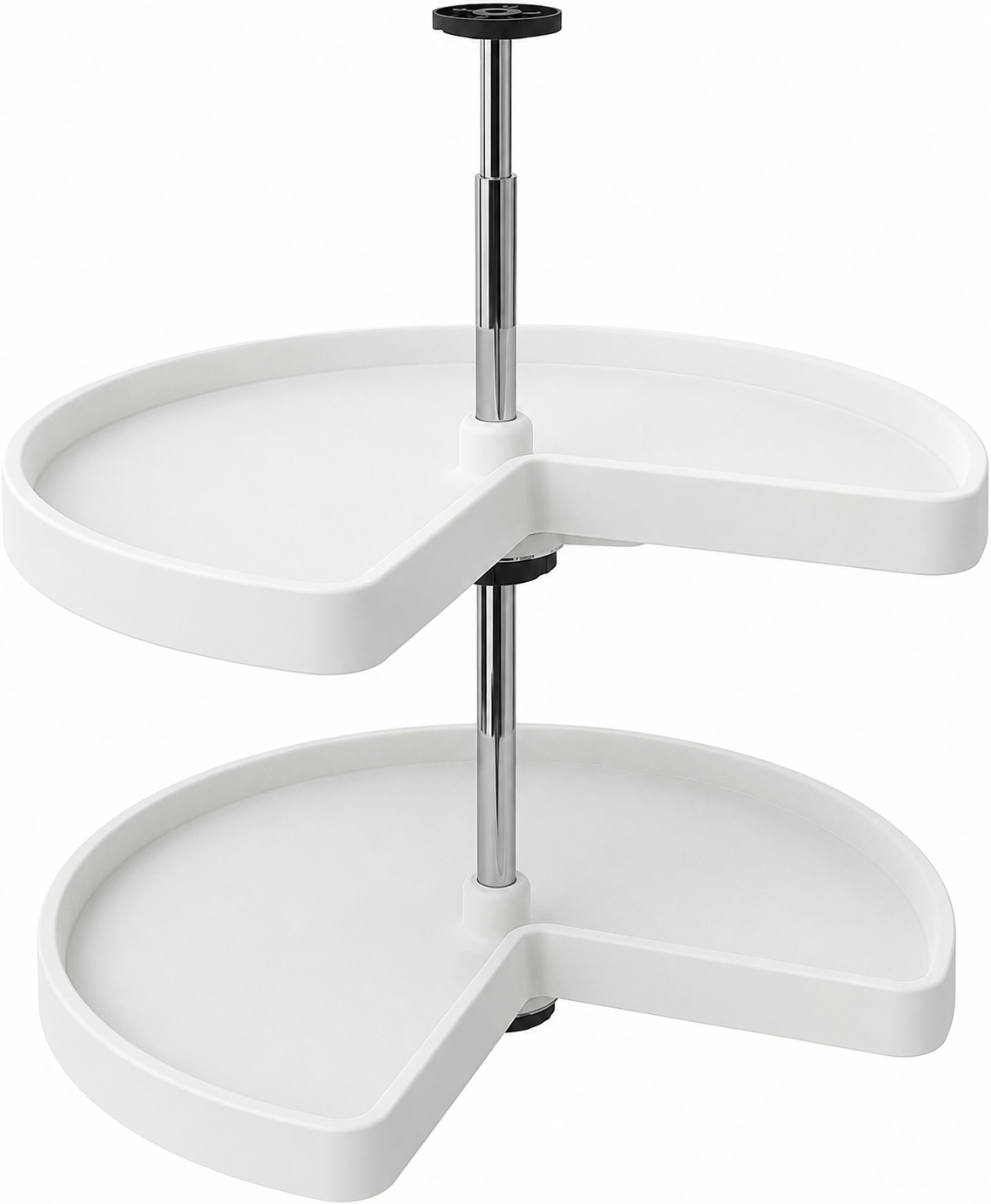
2-Tier Kidney-Shaped Cabinet Lazy Susan
A white kidney-shaped turntable mounted on a center pole, with two rotating tiers built to fit standard corner base cabinets.
Pros
- Smooth rotation on center pole
- Two-tier capacity
Cons
- Requires precise corner measuring
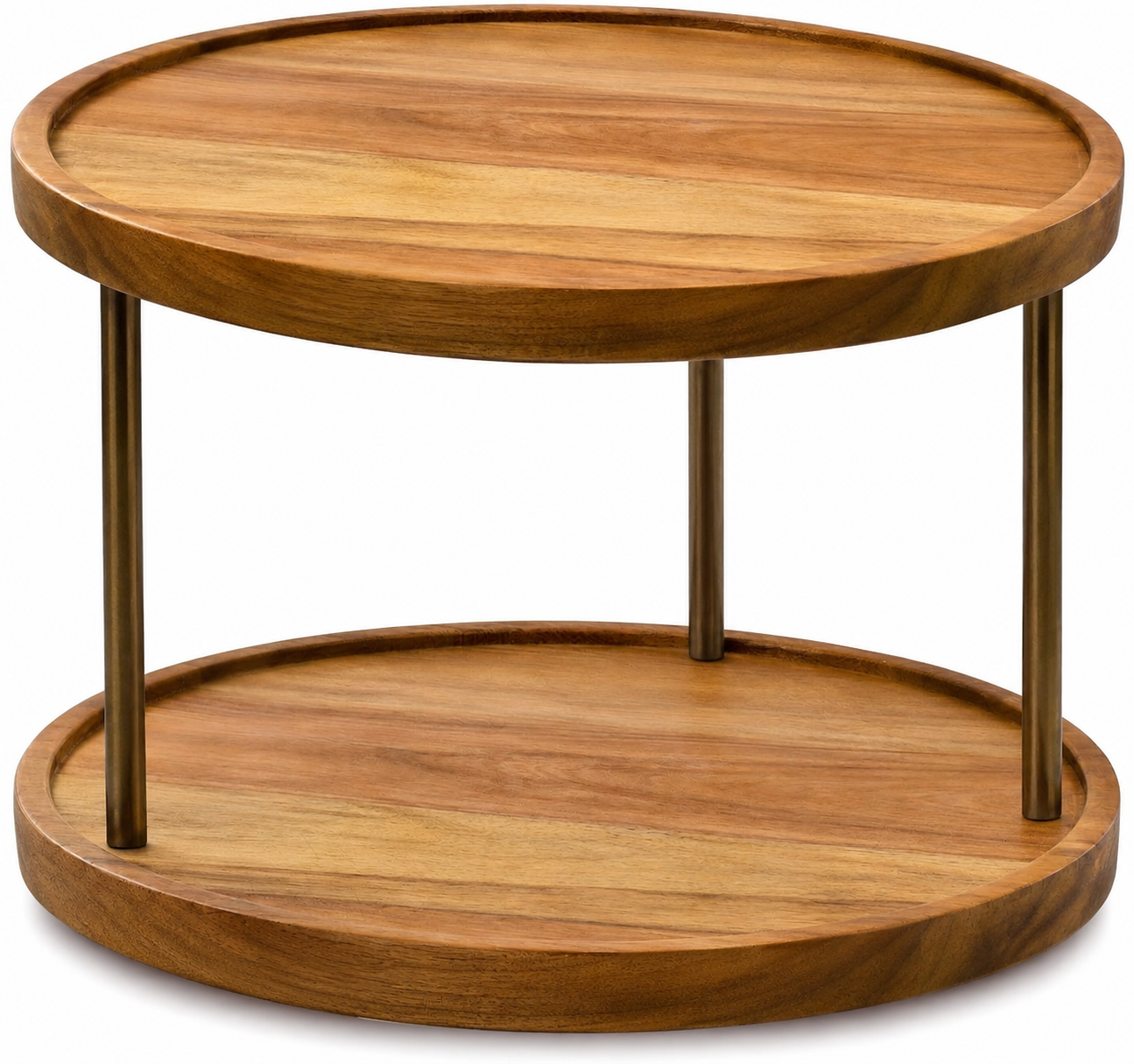
Round Wooden 2-Tier Lazy Susan
Two round solid-wood shelves held up by slim metal legs, with a warm natural grain finish that holds heavier cookware better than plastic.
Pros
- High weight capacity
- Natural wood finish
Cons
- Higher price point
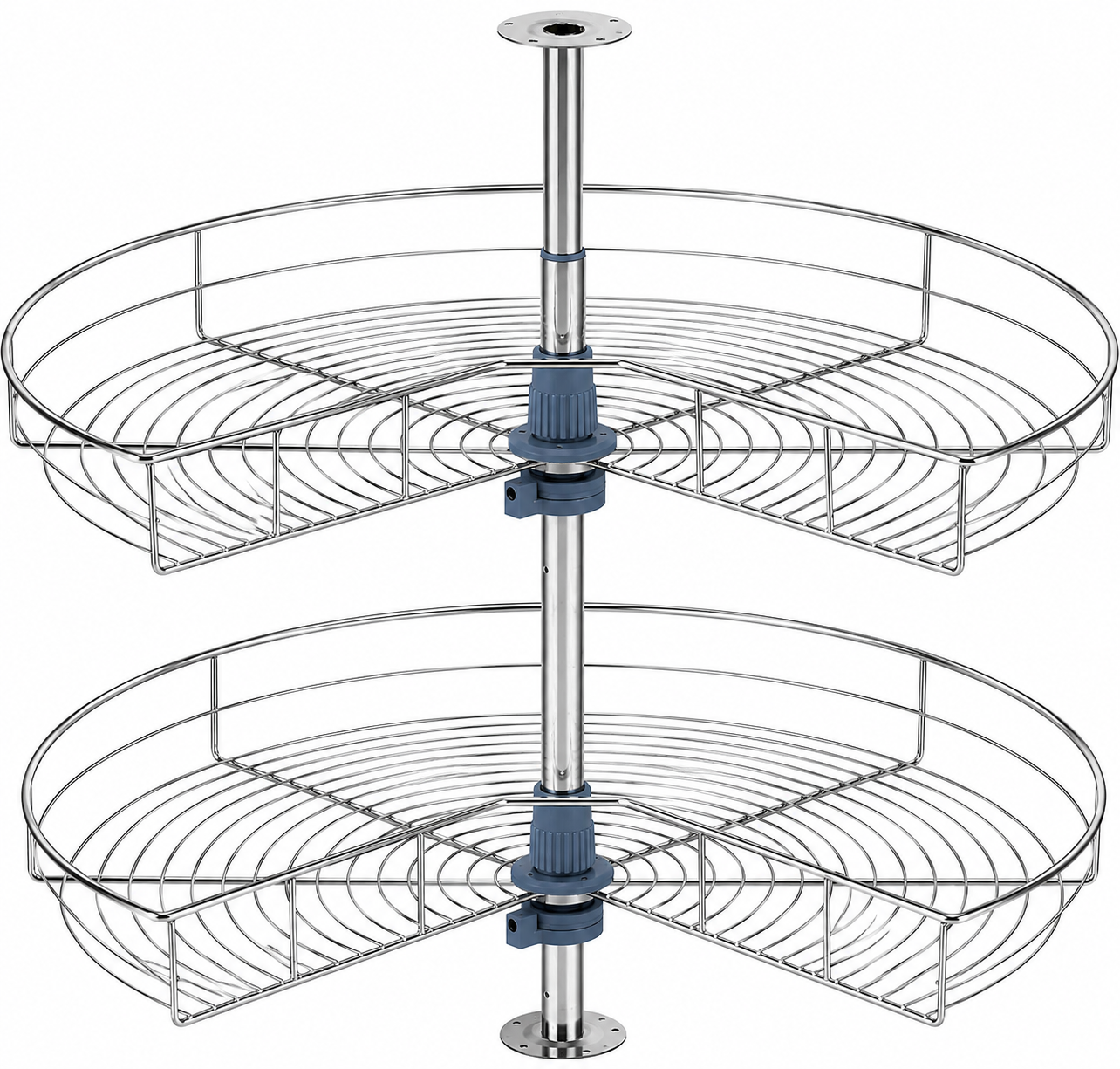
2-Tier Wire Pie-Cut Lazy Susan
Two tiers of open wire pie-cut baskets on a center pole, sized to fit inside standard corner cabinets for easy-to-see, easy-to-spin storage.
Pros
- Open wire design keeps items visible
- Affordable
Cons
- Wire can mark softer containers
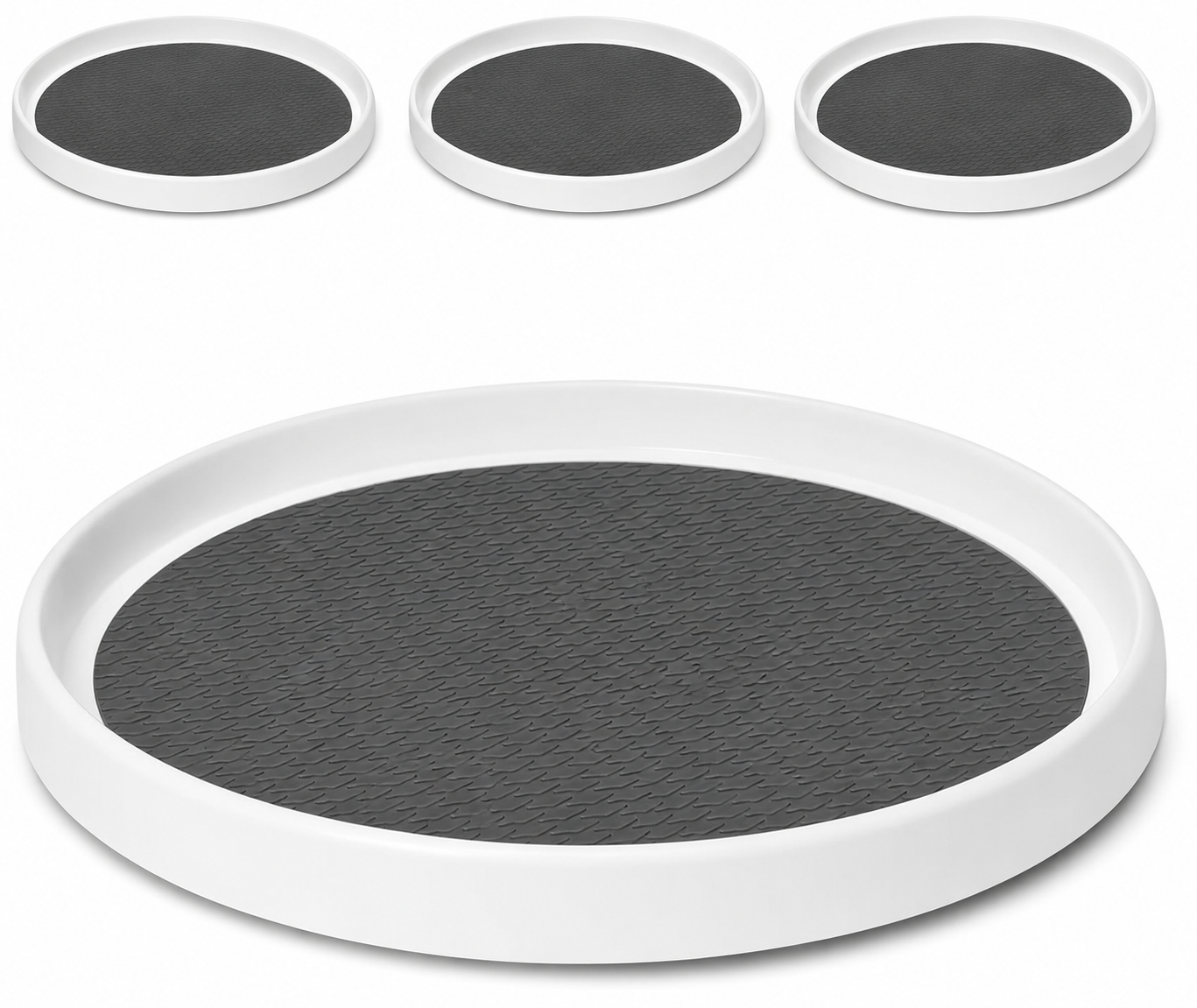
Multi-Size Non-Slip Turntable Set
A set of round, non-slip turntables in multiple sizes — small enough for spice cabinets, large enough for pantry shelves, fridge bins, or vanity counters.
Pros
- Multiple sizes in one set
- Non-slip surface
Cons
- Not a fixed cabinet installation
Final Verdict
Is a Lazy Susan Cabinet Worth It?
For nearly every kitchen with a corner cabinet, the answer is yes. A lazy susan cabinet turns dead, hard-to-reach corner space into genuinely usable storage — no crawling, no digging, no forgotten cans pushed to the back. The right choice comes down to three things: get the diameter right for your cabinet, choose wood over plastic if you're storing heavy cookware, and don't skimp on bearing quality — it's the difference between a unit that still spins smoothly in five years and one that sticks within six months.
Our Recommendation
If you're unsure where to start, a two-tier wooden corner lazy susan with a full ball-bearing ring covers the widest range of kitchens and gives the best long-term value for the price.